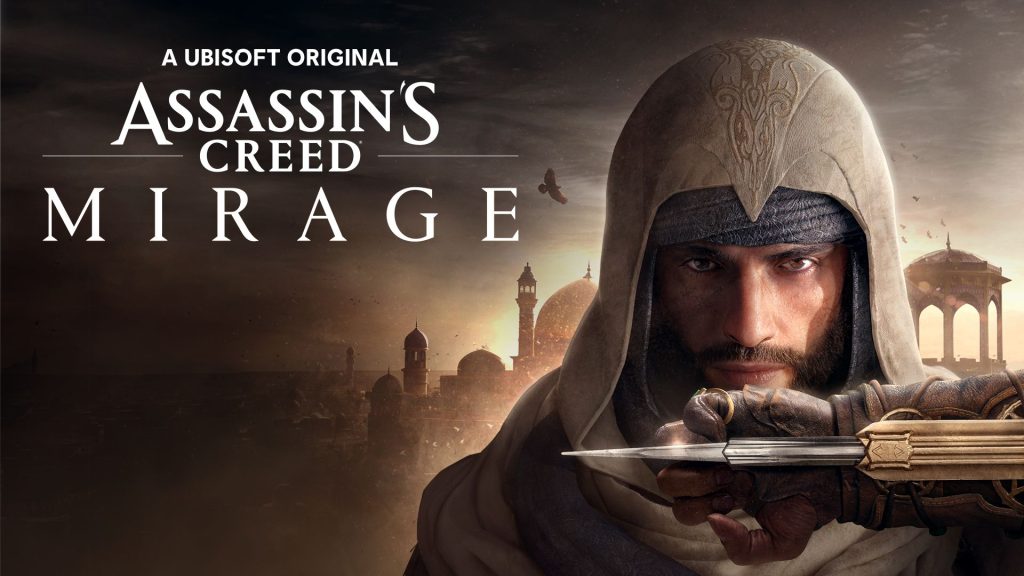
Assassin’s Creed: Mirage isn’t just a nostalgic homage — it’s a carefully woven tale of faith, identity, and rebirth.
Its map may be compact, but the game hides some of the deepest narrative and mechanical secrets in the modern series.
Every alleyway hums with history, and every relic whispers pieces of the creed’s original purpose — long before the Templars had a name.
These are the hidden quests, artifacts, and revelations that turn Basim’s story from an assassin’s origin into a spiritual awakening.
Contents
- Hidden Contract – “The Dagger of the Sands”
- Secret Boss – The Ifrit of the Ruins
- Hidden Outfit – The Veil of Alamut
- Hidden Quest – “The Merchant’s Prayer”
- Hidden Mechanic – Shadow Recall
- Hidden Relic – The Feather of Ishtar
- Secret Ending – “The Hidden One Returns”
- Bonus Tip – The Pomegranate of Knowledge
- Why Assassin’s Creed Mirage’s Secrets Endure
Hidden Contract – “The Dagger of the Sands”
There’s an unmarked Assassin Bureau contract that can only be triggered through rumor gathering.
How to Unlock It:
-
Collect every rumor in the Harbiyah district.
-
Speak to the blacksmith’s apprentice near the docks at night.
-
He hands you a coded note referencing “the blade that sleeps in dust.”
Follow the trail south of the Gate of the Sun to an abandoned excavation site. Inside lies a Saracen tomb guarded by desert thieves.
Defeat them to uncover the Dagger of the Sands, a weapon that refills your focus meter by 25% for every silent kill.
Reading its inscription reveals: “Forged for the first Hidden One who vanished with the dawn.”
It’s implied to belong to the Assassin who first brought the Creed to Arabia, centuries before Basim’s rise.
Secret Boss – The Ifrit of the Ruins
Not all myths are mere legends — Baghdad hides something ancient beneath its foundations.
How to Trigger It:
-
After completing the quest “The Warlord’s Shadow,” meditate at the ruins of Dur-Kurigalzu.
-
Wait until midnight — fire ignites from the cracked ground, and a creature made of flame rises, shouting in Arabic: “You trespass on the promise of ash.”
This is the Ifrit of the Ruins, an ancient jinn created from Isu technology corrupted by time.
Defeating it grants the Heart of Fire, a talisman that automatically deflects one fatal attack every 24 in-game hours.
The area description updates to: “Some legends burn forever beneath the creed.”
Hidden Outfit – The Veil of Alamut
Beyond the standard Legendary outfits, there’s an unlisted piece of assassin attire connected to the Hidden Ones’ earliest days.
How to Obtain It:
-
Collect all 18 Lost Books of Wisdom and bring them to Al-Ghul the Scribe in Abbasiyah.
-
After the final delivery, he quotes an old phrase: “Knowledge is the first cut of the blade.”
-
Return to the Assassin Bureau — a new chest appears in your quarters.
Inside is the Veil of Alamut, a hooded cloak said to have belonged to the first Mentor.
Wearing it grants permanent invisibility while crouched for three seconds after performing an assassination.
The Veil represents enlightenment through silence — the perfect blending of history and faith.
Hidden Quest – “The Merchant’s Prayer”
This unmarked story captures Mirage’s heart: compassion hidden inside conspiracy.
How to Trigger It:
-
Speak to an old merchant near the Great Mosque of Baghdad after dusk.
-
He asks for help retrieving a stolen prayer rug from thieves in the bazaar.
-
When you return it, he thanks you but refuses to pay — instead, he teaches you a secret greeting: “Walk unseen in His light.”
If you repeat this phrase to any Assassin Bureau leader, Basim whispers, “An old friend remembers.”
This triggers unique dialogue about the creed’s earliest creedbearers — those who hid among faiths rather than fight them.
It’s a quiet narrative gem, reinforcing that true stealth is spiritual, not tactical.
Hidden Mechanic – Shadow Recall
Mirage hides a forgotten mechanic from the earliest Assassin’s Creed prototypes — a brief echo of yourself left behind after chain kills.
Unlisted Feature:
-
When using Focus Assassination on three or more enemies in under five seconds, a translucent silhouette remains for one second.
-
If a guard spots it, they investigate that spot, not you.
-
The animation fades with a faint hum reminiscent of the Isu voice distortion.
Lore-wise, it implies the Hidden Ones’ “vanishing” techniques were once rooted in Isu projection technology — bridging myth and stealth mechanics beautifully.
Hidden Relic – The Feather of Ishtar
Throughout Baghdad, you find ancient relics, but one stands apart — a mysterious feather glowing faintly under moonlight.
How to Find It:
-
Climb the dome of the House of Wisdom at midnight.
-
The feather lies on a broken pillar next to a fallen scholar’s statue.
-
Picking it up grants a new entry: “Feather of Ishtar – A gift of forgiveness for those who walk the line between man and god.”
If equipped, every leap of faith causes Basim to fall in slow motion for a brief moment, as if divinely guided.
A poetic relic connecting humanity’s search for knowledge to its fall — literally and symbolically.
Secret Ending – “The Hidden One Returns”
After completing every contract, relic, and bureau mission, a new letter appears on your desk.
It’s addressed simply: “To the one who remembered.”
Reading it triggers a short cinematic of Basim meditating beneath Alamut’s mountain, his eyes glowing faintly as he says:
“Even the Creed was a cage once. I will free it.”
This teaser connects directly to Basim’s eventual fate in Valhalla, serving as both a bridge and prophecy.
It’s one of the most rewarding narrative closures Ubisoft has ever buried in plain sight.
Bonus Tip – The Pomegranate of Knowledge
Inside the Caliphal Palace’s courtyard garden grows a single tree with red fruit.
If Basim picks one and eats it, time briefly slows, and the sound of whispering fills the air: “What is hidden cannot die.”
The fruit vanishes from the world after consumption — a nod to the Garden of Eden motif recurring throughout the Assassin’s Creed mythos.
Why Assassin’s Creed Mirage’s Secrets Endure
Mirage reminds players why the series began — stealth, subtlety, and faith.
Instead of massive battles and sprawling empires, it hides its greatest treasures inside simple acts of observation.
Every secret, every artifact, and every whispered prayer shows that the Creed was never just about freedom — it was about awareness.
Baghdad’s quiet alleys carry echoes of a time when truth was hunted, but never lost.