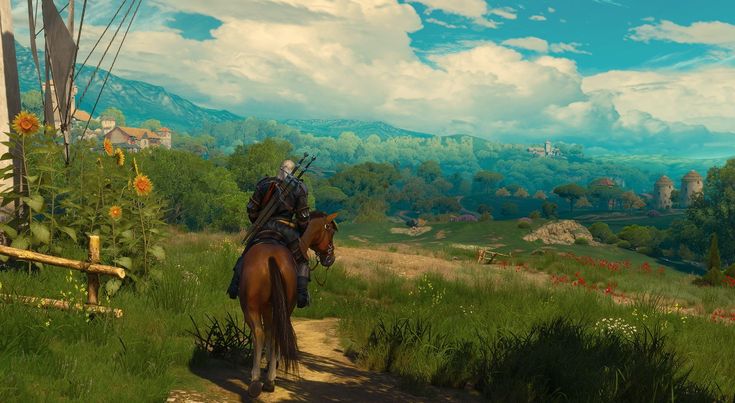
Blood and Wine isn’t just an expansion — it’s a farewell gift.
Beneath Toussaint’s vineyards and fairy-tale castles lies a world of buried tragedy, forgotten monsters, and choices that echo beyond the main story.
This guide reveals the secrets most witchers overlook — hidden quests, rare items, and moral twists that even seasoned monster slayers might have missed.
Contents
- Hidden Ending – “The Scarlet Pact”
- The Hidden Grandmaster Mutation – “Viper’s Soul”
- Hidden Quest – “The Feast of Fools”
- Hidden Boss – The Sun-Blessed Bruxa
- Secret Area – The Burned Archive of Beauclair
- Hidden Mechanics – Geralt’s Journal Shifts
- Bonus Tip – The Mutant Rooster of Corvo Bianco
- Why Blood and Wine’s Secrets Endure
Hidden Ending – “The Scarlet Pact”
Most players see one of the two well-known finales: Dettlaff dead or reconciled.
However, there’s a third, secret ending hidden behind unique dialogue and timed exploration.
How to Unlock It:
-
Complete “The Night of Long Fangs” and choose to pursue Syanna first.
-
In the Land of a Thousand Fables, do not confront her immediately.
-
Explore the northern forest until you find a sleeping red wolf.
-
Use Aard to wake it — it speaks, revealing itself as Ekhidna’s Avatar, a spirit of forgotten fairy tales.
If you promise to spare both sisters, the spirit gives you a Crimson Sigil.
Later, during the confrontation, show Syanna the Sigil instead of reasoning or attacking.
Result:
Both sisters survive and leave Toussaint behind, Geralt receiving the “Scarlet Pact” ending — a silent peace.
He notes in his journal: “For once, blood answered to mercy.”
A melancholy, secret resolution few ever see.
The Hidden Grandmaster Mutation – “Viper’s Soul”
There’s an unlisted mutation available only after the main questline.
How to Unlock It:
-
Return to the Mutations Laboratory after finishing “La Cage au Fou.”
-
Activate the abandoned control panel with five Greater Mutagens (any color).
-
The lab opens a new section containing an ancient viper skeleton.
Reading the etched inscription teaches Viper’s Soul, a hybrid mutation that enhances critical hit chance the lower your health gets.
At 10% health, Geralt’s attack speed doubles — a true risk-reward system.
This mutation’s origin text mentions “Serpents who bit their own tails to taste eternity.”
A poetic nod to the Viper School’s lost philosophy of balance between poison and control.
Hidden Quest – “The Feast of Fools”
A secret, unmarked side quest that activates only under strict conditions.
How to Trigger It:
-
After completing the main story, sleep at Corvo Bianco on Belleteyn Eve (in May on the in-game calendar).
-
A masked visitor appears, inviting you to a “feast.”
-
Follow him to an abandoned estate near Beauclair.
There, a group of ghosts — jesters, nobles, and peasants — dance around a table of illusionary food.
If you join their feast, time passes until dawn. When you awaken, you’ll find a Jester’s Crown, which grants 5% experience from all kills and changes Geralt’s idle whistle into a laugh.
Lore implication: these are souls bound to a cursed celebration, doomed to repeat their revel every year until a witcher joins them — and leaves.
Hidden Boss – The Sun-Blessed Bruxa
Not all monsters serve the night. A single Bruxa hidden in the vineyards refuses to kill.
How to Find Her:
-
Ride east of Francollarts vineyard during a full moon.
-
You’ll hear singing among the vines.
-
Approach without drawing your sword.
She introduces herself as Lunara, a Bruxa seeking to resist her instincts.
If you offer her Mandrake liquor, she gives you the Sun-Blessed Fang, a relic sword that glows faintly at dawn and gains +25% damage against undead.
Killing her instead yields only her mutagen — and the sound of faint sobbing when you meditate nearby.
It’s one of the most subtle moral moments in the expansion — empathy rewarded through restraint.
Secret Area – The Burned Archive of Beauclair
Beneath Beauclair Palace lies a collapsed library filled with pre-Conjunction records — unreachable during the main questline unless you trigger a glitch that’s now an intentional secret.
How to Access It:
-
Equip the Mutation “Piercing Cold.”
-
Use Aard on the cracked floor near the Grand Library (north wing).
-
The ice shockwave breaks the tiles, revealing stairs to the Burned Archive.
Inside are:
-
Scrolls describing the first Witcher experiments (long before Kaer Morhen).
-
A relic blade, Silver Echo, with a hidden passive that increases sign intensity by 15%.
-
Notes signed “A.M.,” likely belonging to Alzur himself.
This archive explains how the witcher curse was meant to be “temporary” — a spell of preservation that outlived its creators.
Hidden Mechanics – Geralt’s Journal Shifts
Geralt’s journal doesn’t just track quests — it subtly changes tone based on your moral record.
Unlisted System:
-
Killing peaceful monsters adds bitter commentary (“Sometimes there’s no line left to cross.”).
-
Sparing foes results in melancholic notes (“Maybe they deserved better. Maybe I did.”).
-
If you finish the expansion with over 90% moral choices leaning merciful, Geralt’s final journal entry changes to: “Toussaint taught me that even monsters can dream.”
It’s CD Projekt’s quiet way of letting your humanity shape Geralt’s voice — invisible but profound.
Bonus Tip – The Mutant Rooster of Corvo Bianco
A humorous Easter egg that hides a surprisingly deep lore connection.
How to Trigger It:
-
Feed your Corvo Bianco rooster three raw Mutagens.
-
Sleep for three in-game days.
-
The rooster crows differently — an eerie, echoing shriek.
Next morning, you’ll find a note on your bed: “It dreamed of wings of glass.”
No gameplay effect, but it’s a callback to a line from The Witcher 1, linking mutagens to the alchemical experiments of early Kaer Morhen.
Yes — even the rooster can be corrupted by science.
Why Blood and Wine’s Secrets Endure
Blood and Wine isn’t just a coda — it’s an epilogue that hides reflections on the entire Witcher saga.
Its secret endings and unseen dialogues remind players that Geralt’s story isn’t about monsters or contracts, but about the moments between them: quiet forgiveness, curiosity, and the decision to live a little longer in a cursed world.
Toussaint may sparkle with sunlight and wine, but its real treasure lies underground — in stories buried beneath its perfection.